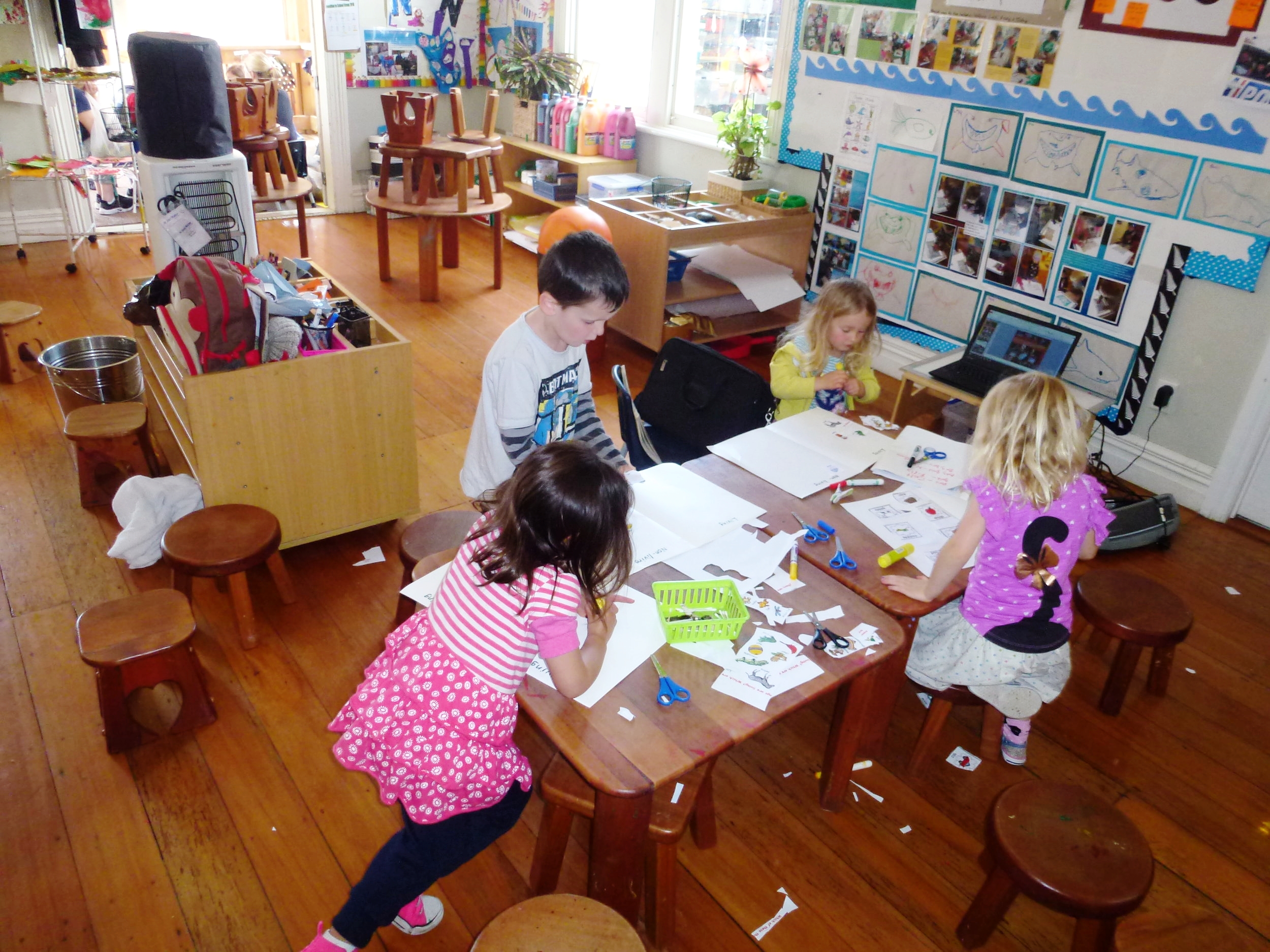
Transition to School Programme
Our Transition to School Programme is designed for children aged 4 years and over and reflects our commitment to a negotiated curriculum that responds to children's strengths, interests, and learning needs. Learning experiences are guided by Te Whāriki and support children to develop the knowledge, skills, attitudes, and dispositions that enable them to become confident and capable learners.
The programme operates with a teacher-to-child ratio of 1:6, providing opportunities for meaningful interactions, individual support, and rich learning experiences. Sessions generally run from 12.30 pm to 1.45 pm while younger children are resting.
Teaching staff rotate through the programme about every eight weeks, giving children opportunities to build relationships with a range of educators and experience different teaching strengths, perspectives, and learning opportunities.
Supporting a Successful Transition to School
Our goal is to ensure children and their whānau experience a positive and seamless transition to primary school. Through intentional teaching and carefully planned learning experiences, we aim to strengthen children's confidence, independence, critical thinking, and readiness for their next educational journey.
We recognise that school readiness is about more than academic skills. It includes children's social competence, emotional wellbeing, resilience, confidence, communication skills, independence, and ability to participate positively in a learning community.
We work closely with families by providing information about local schools, supporting participation in school visits, and maintaining relationships with surrounding schools. This helps us stay informed about enrolment processes and ensures families receive the guidance and support they need throughout the transition process.
When Will My Child Join the Programme?
Children become eligible for the Transition to School Programme from the age of four. Placement availability is based on factors such as children's school leaving dates, enrolment patterns, programme spaces, and age.
Places are allocated fairly, taking into consideration children's school start dates, programme availability, and group composition, to ensure equitable opportunities for participation.
Planning Ahead for School Enrolment
To support a smooth and successful transition to school, we encourage families to begin planning for school enrolment well in advance.
If your child will be turning five within the next twelve to six months, we strongly recommend contacting your chosen school and completing the enrolment process as early as possible.
Many local schools operate a cohort entry system, which means children begin school on one of two designated intake dates each term:
The first day of the school term, or
A mid-term cohort entry date.
Your child's birth date will determine which intake date applies.
As part of our partnership with families, please keep us informed of your child's confirmed school enrolment and start date as early as possible. Early notification assists us with programme planning, transition support, staffing arrangements, and centre roll management.
With cohort entry now in place at many schools, some children may remain enrolled at the centre for longer than originally anticipated. Advance notice helps us continue to meet Ministry of Education licensing requirements while ensuring we can effectively support transitions for all children and families.
Developing Independence and Self-Management
A key focus of the programme is fostering independence and self-help skills that support a successful move to school. Children are encouraged to:
Care for their personal belongings.
Pack away items independently.
Manage toileting and hygiene routines.
Follow group expectations and routines.
Develop responsibility and self-confidence.
Be a good friend who is kind and considerate.
Preparing Children for Transition
Prior to joining the Transition to School Programme, children may participate in our Focus Group Programme. This provides a gradual introduction to the expectations, routines, and learning experiences they will encounter within the Transition to School sessions.
Programme delivery remains flexible, allowing educators to respond to children's ages, interests, group dynamics, and daily needs.
Families receive information about both programmes before their child's participation, outlining the purpose, expectations, and benefits of each learning opportunity.
Learning Within the Transition to School Programme
The programme offers an integrated curriculum that weaves together learning across:
Literacy and Communication
Mathematics
Science
Technology
The Arts
Social Sciences
Physical Health and Wellbeing
Learning experiences are intentionally designed to integrate these learning areas in meaningful, play-based, inquiry-based, and project-based contexts that reflect children's interests, strengths, and emerging questions about the world around them.
Through these experiences, children develop the dispositions and skills that support lifelong learning, including:
Problem-solving
Communication
Collaboration
Creativity
Self-management
Social competence
Resilience
Confidence and independence
As children approach school age, they are encouraged to practise routines that mirror those they will encounter at school, such as bringing a lunch box and drink bottle and using bag hooks rather than lockers. These experiences help children become familiar with school expectations and build confidence in managing their daily routines.
Teachers also facilitate discussions about starting school, share stories about their own school experiences, and encourage children to talk about their thoughts and feelings about this important transition.
Children and families are invited to share photos and experiences from school visits, helping children develop familiarity with their future learning environment and strengthen connections between home, early learning, and school.
For children with additional learning or support needs, teachers work closely with whānau and relevant agencies to support their individual strengths, needs, and goals throughout the transition process.
Sharing Learning with Families
We value strong partnerships with families and provide several ways to keep whānau informed about children's experiences within the programme.
A weekly evaluative learning story is shared through Storypark, providing insight into the experiences, learning, and progress occurring within the programme.
A dedicated Transition to School display area showcases children's learning, projects, and achievements.
Families receive a copy of our Transition to School Information Pack to support a positive start at school.
Through meaningful learning experiences, strong partnerships with families, and a focus on developing confidence, wellbeing, and independence, our Transition to School Programme supports children to move into primary education as capable, competent, and enthusiastic learners.