Welcome to the Under Twos
Nau mai, haere mai ki ngā pēpī
We warmly welcome you and your child to Kids at Play. We value the relationships we build with children and whānau and recognise the importance of working together to support your child's learning, wellbeing, and development.
This page has been designed to help familiarise you with our Under Twos environment, routines, and daily practices. Please speak with our teaching team at any time if you have questions or would like to discuss your child's needs.
Our Under Twos Environment
Our Under Twos space is licensed for up to 12 children under two years of age. The teaching team works collaboratively to provide nurturing, responsive care and meaningful learning experiences throughout the day.
Our teachers rotate between the Under Twos and Over Twos environments, ensuring continuity across the centre. Asuka, our Head Teacher, is available to support families and answer any questions you may have.
Sharing Information About Your Child
The more we know about your child, the better we can support them throughout their day. We appreciate families sharing information about sleep, feeding, health, routines, or any changes at home that may affect their child's well-being.
We encourage parents and caregivers to communicate directly with a teacher at drop-off and record any important information in the daily message book located in the parent area.
Learning Through Play
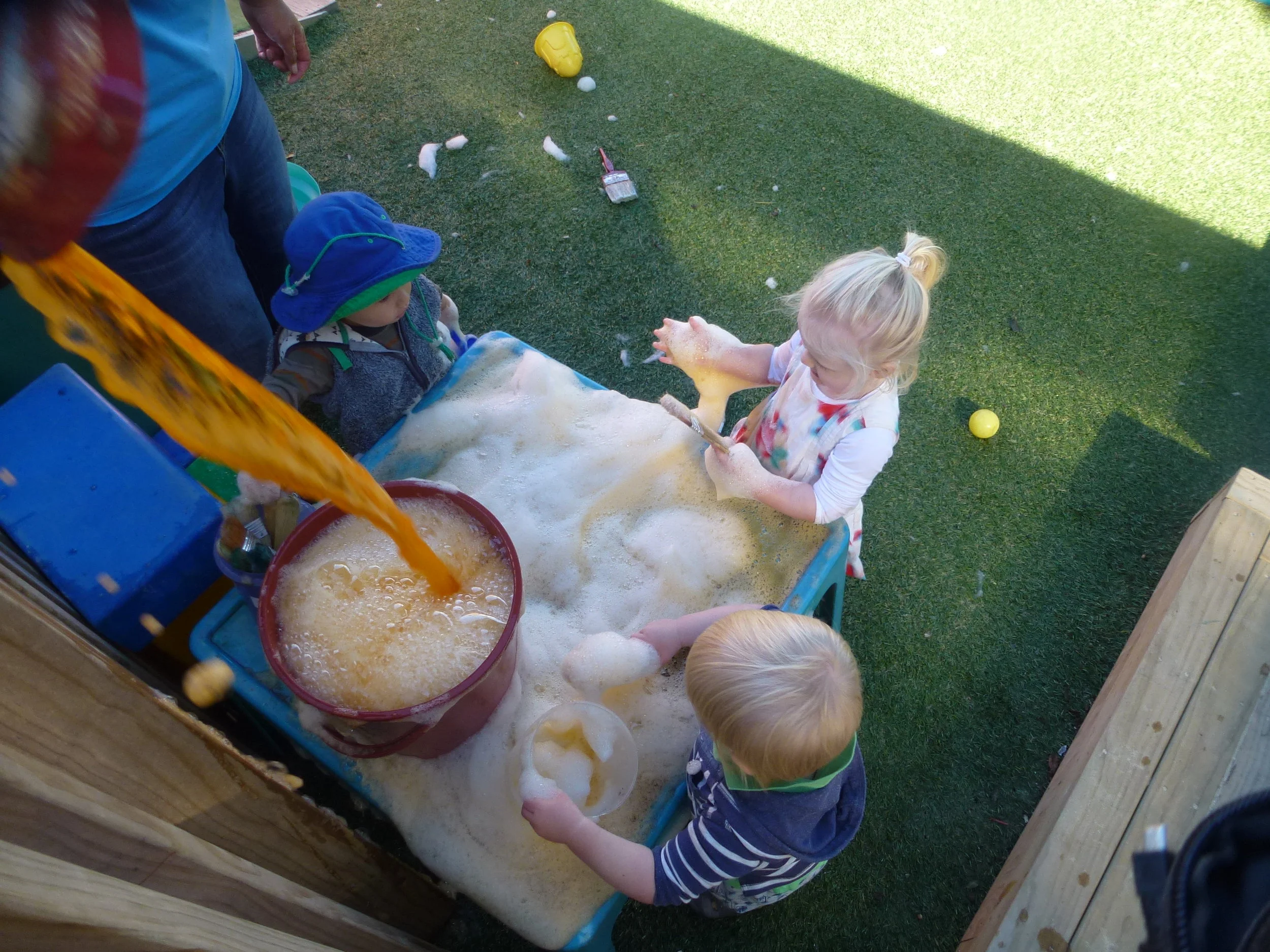
Children's days are filled with opportunities to explore, investigate, discover, and develop relationships through play. Our programme responds to children's interests, strengths, and developing capabilities.
As our learning experiences can be wonderfully messy, we recommend children wear comfortable clothing suitable for active play. Please ensure all clothing is clearly named.
Important Information for Families
Lockers and Personal Belongings
Each child has a designated locker space during their attendance days. Please provide:
Named nappies
Comfort items (such as a blanket or dummy)
A minimum of three complete changes of named clothing
Children's bags should be stored in the locker area located in the awning.
Parent Pockets
Please check your family pocket daily for notices, forms, and important centre information. Parent pockets are located in the parent area and are clearly labelled.
Sleep and Rest
Children have an individual sleep space appropriate to their age and stage of development. Sleep is monitored in accordance with our safe sleep procedures, with regular physical checks conducted and recorded by teaching staff.
If your child uses a comfort item for sleep, please let the teaching team know. We ask that these items are taken home regularly for washing.
Families can view their child's sleep records each day and are encouraged to speak with teachers about any sleep-related questions or routines.
Nappy Changes and Bottle Information
We maintain daily records of children's nappy changes, bottle feeds, and fluid intake. These records are available for families to view each day.
Please ensure:
All nappies are clearly named.
Bottles are clearly labelled.
Prepared bottles are placed in the designated bottle area or fridge.
Bottles are taken home daily for cleaning.
Health, Accidents, and Illness
Should your child experience an accident or become unwell while in our care, staff will record the incident, provide appropriate care, and communicate this with you. Families are asked to review and sign any relevant accident or illness records.
Please also check notifications through our sign-in system for important messages.
Meals and Nutrition
Children are provided with nutritious meals and snacks prepared in accordance with our seasonal menu. Our menu is displayed within the centre and is also available here on our website.
Celebrating Birthdays
We celebrate birthdays through special group experiences, songs, and certificates. In line with our healthy eating philosophy, families are not required to provide birthday cakes or treats.
Storypark
All families are invited to join Storypark, our secure online learning community.
Through Storypark you can:
View your child's learning stories and photographs
Receive centre updates and messages
Share comments, photos, and family experiences
Invite approved family members to follow your child's learning journey
Medication
Any medication required during the day must be discussed with teaching staff and recorded on the appropriate medication form.
Please note:
Medication must be clearly labelled with the child's name.
Prescription medication must be current and in its original container with the pharmacy label attached.
Parents or caregivers are required to authorise administration before medication can be given.
Questions or Concerns
We value open communication and encourage families to speak with us whenever questions arise.
If you have any concerns, please speak with:
The teaching team
The Head Teacher
The Centre Supervisor
The Centre Manager
We are here to work in partnership with you and your whānau.
Daily Routine
Please note that routines are flexible and responsive to individual children's needs, particularly around sleep, feeding, and care moments.
Time Routine
7:30 am Children begin the day together in the Over Twos environment
9:00 am Morning tea9:30amNappy changing, sleep routines, and programme experiences
9:30 am - 11:00 am Indoor and outdoor learning experiences
11:00 am Lunch
11:30 am Nappy changing and story time
11:45 am Rest and sleep time; play experiences for children who are awake
1:30 pm Nappy changing
2:00 pm Afternoon tea
2:15 pm Indoor and outdoor learning experiences
2:45 pm Afternoon sleep for children who require it
3:45 pm Nappy changing and tidy up
4:00 pm Late afternoon snack
4:00 pm - 5:30 pm Flexible play and family departures
Our Room Philosophy
We recognise that care moments such as feeding, nappy changing, sleeping, and settling are valuable opportunities for connection, communication, and learning. We strive to create a calm, nurturing environment where children feel safe, respected, and empowered to explore the world around them.
This version aligns more closely with current Te Whāriki language, stronger partnership-with-whānau principles, and contemporary early childhood practice, while remaining welcoming and informative for families.


